These days customers don’t shop from just one place, whether it’s online or offline. The ecommerce business has changed over the last few years. If we talk about online shopping, they use platforms like Amazon, Shopify, eBay, Walmart Marketplace, and social media businesses.
Because of all this, the eCommerce marketplace is growing rapidly. But along with that growth comes a lot of effort and challenges. One of the biggest challenges, and usually the first one businesses face is inventory management.
Without the right tools managing inventory in multiple businesses quickly becomes chaotic. If proper tools are not used, problems like overselling, stockouts, delayed order fulfillment, and unhappy customers start to appear. This is why every growing eCommerce brand needs a multichannel inventory management system. Manual data entries have lots of mistakes. Automation minimizes errors related to:
In this guide, we’ll break down what a multi channel inventory management system is.
A multi channel inventory management system is software that helps to control ecommerce businesses. A multi channel inventory management system to track, manage, and synchronize inventory in multiple sales channels from a single platform.
Instead of updating stock levels manually on each marketplace or ecommerce store. But this system automatically syncs inventory in real time. When a product sells on one channel, the available quantity updates instantly all other connected channels.
How It Works
Unlike single channel inventory tools, multi channel inventory management software is designed for brands selling everywhere at o.
As the eCommerce market continues to grow, managing inventory is becoming more and more difficult. Here are the most common challenges businesses face without a proper multi channel system.
Selling the same item at the same time on multiple platforms is overselling. This often results in canceled orders, refunds, and unhappy customers leaving with negative reviews.
On the other hand, running out of stock means missed sales and customers turning to competitors. Manual inventory tracking just can’t keep up with real time demand across different sales channels.
Selling on Amazon, Shopify, WooCommerce, eBay, Etsy, and Walmart often means managing multiple dashboards. Since each platform works on its own, keeping stock levels accurate becomes tough without automation.
Lack of Real Time Inventory Visibility
Without one central system, ecommerce brands don’t have a clear view of what’s going on.
This lack of clarity makes forecasting, purchasing, and scaling extremely difficult.
Selling products in multiple stores like physical stores, online shops opens the door to big growth for a business. But it can also make managing inventory more complicated. Managing multiple shops at one time is too hard nowadays. That’s where a multi channel inventory management system comes in.
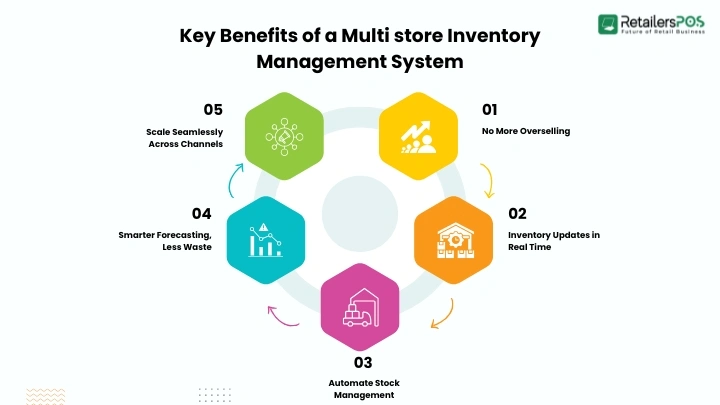
We’ll explore the key benefits of using a multi channel inventory management system,
A multi channel inventory management system keeps stock levels synchronized across all sales platforms in real time. When a product is sold on one channel, the inventory is instantly updated everywhere else. This prevents overselling, which can lead to canceled orders and dissatisfied customers, as well as underselling, where available stock is not fully utilized due to inaccurate inventory data.
The system automates routine inventory tasks such as stock updates, order processing, and low-stock alerts. By eliminating manual tracking and repetitive data entry, businesses can reduce human error and free up staff time to focus on more strategic activities like customer service and business growth.
Effective inventory control ensures that businesses invest the right amount of capital in stock. By avoiding overstocking, companies reduce holding costs and tied-up cash, while preventing stockouts helps maintain consistent sales revenue. This balance leads to healthier cash flow and better financial stability.
Multi-channel inventory systems analyze historical sales data, seasonal trends, and demand patterns to generate accurate forecasts. These insights help businesses plan purchasing decisions more effectively, reduce waste, and ensure product availability during peak demand periods.
As a business grows, managing inventory across multiple sales channels becomes increasingly complex. A centralized inventory store management system allows businesses to add new channels, warehouses, or product lines without disrupting operations, making it easier to scale efficiently and sustainably.
Scaling an ecommerce business without proper inventory management is risky. A multi channel system provides the foundation for sustainable growth.
Adding a new marketplace becomes simple. Once connected inventory automatically syncs without manual setup for each product.
During flash sales holidays or promotions inventory systems process large order volumes without delays or errors.
Growing brands often store inventory in multiple warehouses or fulfill centers. A multi channel inventory management system tracks stock by location and routes orders expertly.
Not all systems are created equal.But when you choose a system for your business, you should always go for the best one available in the market. When choosing the best multi store inventory management system. look for these key features:
Choosing the right system ensures long term use and growth.
A multi channel inventory management system benefits businesses of all sizes, including:
Absolutely. A multi channel inventory management system helps retail store and ecommerce brands:
In today’s competitive ecommerce environment, managing inventory manually or with disconnected tools puts your business at risk. Brands that invest in centralized, real time inventory management gain a significant advantage over competitors.
Ecommerce success isn’t just about selling a high amount of products. It’s about growing the right way. A multi channel inventory management system helps you track stock and automate tasks across all your sales channels.
Whether you’re a small store or a fast growing brand. The right inventory system can reduce stress and support steady, long term growth.
Inventory management focuses on tracking stock levels across channels, while order management handles order processing, fulfillment, and shipping. Many systems combine both, but inventory management is specifically about where your stock is and how much is available at any moment.
Yes. By automating stock updates, order syncing, and reporting, it significantly reduces spreadsheets, manual uploads, and human error. Most importantly freeing your team to focus on growth instead of reconciliation.
Unsynced inventory can cause overselling, canceled orders, marketplace penalties, and poor customer trust. Over time, it can also distort sales data and make demand planning unreliable.
Most modern systems do. They allow brands to manage inventory across multiple warehouses, fulfillment centers, or retail locations, helping optimize shipping times and reduce logistics costs.
Migration is usually straightforward, especially with systems that offer data import tools or onboarding support. Moving early reduces long-term complexity and prevents scaling issues later.
Yes. Many systems analyze sales trends, seasonality, and channel performance to support demand forecasting and replenishment planning.
Positively. Accurate inventory reduces canceled orders and late shipments, which helps maintain strong seller metrics on marketplaces like Amazon and Walmart.
Reputable platforms use encrypted data storage, role based access, and regular backups to keep inventory and sales data secure.
The best time is before inventory problems start impacting revenue or customer experience. When selling on more than one channel or managing more than a small catalog. To grow a business, you should not wait until it becomes big to start using this. It is better to use it from the early stage, because that’s how you can use it properly and get the best results.

These days customers don’t shop from just one place, whether it’s online or offline. The ecommerce business has changed over the last few years. If we talk about online shopping, they use platforms like Amazon, Shopify, eBay, Walmart Marketplace, and social media businesses. Because of all this, the eCommerce marketplace is growing rapidly. But along with that growth comes a lot of effort and challenges. One of the biggest challenges, and usually the first one businesses face is inventory management. Without the right tools managing inventory in multiple businesses quickly becomes chaotic. If proper tools are not used, problems like overselling, stockouts, delayed order fulfillment, and unhappy customers start to appear. This is why every growing eCommerce brand needs a multichannel inventory management system. Manual data entries have lots of mistakes. Automation minimizes errors related to: Incorrect stock counts Duplicate SKUs Missed updates Pricing mismatches In this guide, we’ll break down what a multi channel inventory management system is. What Is a Multi Channel Inventory Management System? A multi channel inventory management system is software that helps to control ecommerce businesses. A multi channel inventory management system to track, manage, and synchronize inventory in multiple sales channels from a single platform. Instead of updating stock levels manually on each marketplace or ecommerce store. But this system automatically syncs inventory in real time. When a product sells on one channel, the available quantity updates instantly all other connected channels. How It Works Keep all your product inventory in one easy to use dashboard. Automatically syncs stock levels across all your sales channels. Updates inventory in real time after every sale, return, or change. Connects smoothly with ecommerce stores, marketplaces, warehouses, and POS systems. Unlike single channel inventory tools, multi channel inventory management software is designed for brands selling everywhere at o. The Inventory Challenges Ecommerce Brands Face Today As the eCommerce market continues to grow, managing inventory is becoming more and more difficult. Here are the most common challenges businesses face without a proper multi channel system. Overselling and Stockouts Selling the same item at the same time on multiple platforms is overselling. This often results in canceled orders, refunds, and unhappy customers leaving with negative reviews. On the other hand, running out of stock means missed sales and customers turning to competitors. Manual inventory tracking just can’t keep up with real time demand across different sales channels. Managing Inventory Across Multiple Sales Channels Selling on Amazon, Shopify, WooCommerce, eBay, Etsy, and Walmart often means managing multiple dashboards. Since each platform works on its own, keeping stock levels accurate becomes tough without automation. Lack of Real Time Inventory Visibility Without one central system, ecommerce brands don’t have a clear view of what’s going on. Available stock Reserved inventory Low stock products Best selling SKUs This lack of clarity makes forecasting, purchasing, and scaling extremely difficult. Key Benefits of a Multi Channel Inventory Management System Selling products in multiple stores like physical stores, online shops opens the door to big growth for a business. But it can also make managing inventory more complicated. Managing multiple shops at one time is too hard nowadays. That’s where a multi channel inventory management system comes in. We’ll explore the key benefits of using a multi channel inventory management system, Prevents Overselling and Underselling A multi channel inventory management system keeps stock levels synchronized across all sales platforms in real time. When a product is sold on one channel, the inventory is instantly updated everywhere else. This prevents overselling, which can lead to canceled orders and dissatisfied customers, as well as underselling, where available stock is not fully utilized due to inaccurate inventory data. Saves Time Through Automation The system automates routine inventory tasks such as stock updates, order processing, and low-stock alerts. By eliminating manual tracking and repetitive data entry, businesses can reduce human error and free up staff time to focus on more strategic activities like customer service and business growth. Improves Cash Flow Management Effective inventory control ensures that businesses invest the right amount of capital in stock. By avoiding overstocking, companies reduce holding costs and tied-up cash, while preventing stockouts helps maintain consistent sales revenue. This balance leads to healthier cash flow and better financial stability. Inventory Forecasting Multi-channel inventory systems analyze historical sales data, seasonal trends, and demand patterns to generate accurate forecasts. These insights help businesses plan purchasing decisions more effectively, reduce waste, and ensure product availability during peak demand periods. Supports Business Scalability As a business grows, managing inventory across multiple sales channels becomes increasingly complex. A centralized inventory store management system allows businesses to add new channels, warehouses, or product lines without disrupting operations, making it easier to scale efficiently and sustainably. How a Multi Channel Inventory Management System Helps You Scale Scaling an ecommerce business without proper inventory management is risky. A multi channel system provides the foundation for sustainable growth. Easy Expansion to New Sales Channels Adding a new marketplace becomes simple. Once connected inventory automatically syncs without manual setup for each product. High Order Volumes During flash sales holidays or promotions inventory systems process large order volumes without delays or errors. Supports Multi Warehouse and Multi Location Management Growing brands often store inventory in multiple warehouses or fulfill centers. A multi channel inventory management system tracks stock by location and routes orders expertly. Features to Look for in a Multi Channel Inventory Management System Not all systems are created equal.But when you choose a system for your business, you should always go for the best one available in the market. When choosing the best multi store inventory management system. look for these key features: Real time inventory synchronization Integration with major marketplaces and ecommerce platforms Low stock and reorder alerts Bulk product and SKU management Order management integration Reporting and analytics dashboards Multi warehouse inventory tracking API access for custom automation Choosing the right system ensures long term use and growth. Who Should Use a Multi Channel Inventory Management System? A multi channel inventory management system benefits businesses of all sizes, including: Small Ecommerce Businesses Simplifies operations from day one Prevents costly inventory mistakes Supports early growth Mid-Sized and Enterprise Brands Manages high SKU counts and order volumes Supports multiple warehouses and teams Enables data driven decision making D2C Brands Maintains consistent inventory across website, marketplaces, and retail Dropshippers and Wholesalers Tracks supplier stock levels Syncs inventory with multiple sales partners Is a Multi Channel Inventory Management System Worth It? Absolutely. A multi channel inventory management system helps retail store and ecommerce brands: Reduce operational chaos Improve customer satisfaction Increase revenue Scale confidently In today’s competitive ecommerce environment, managing inventory manually or with disconnected tools puts your business at risk. Brands that invest in centralized, real time inventory management gain a significant advantage over competitors. Final Thoughts Ecommerce success isn’t just about selling a high amount of products. It’s about growing the right way. A multi channel inventory management system helps you track stock and automate tasks across all your sales channels. Whether you’re a small store or a fast growing brand. The right inventory system can reduce stress and support steady, long term growth. FAQs How Is Multi Channel Inventory Management Different from Order Management? Inventory management focuses on tracking stock levels across channels, while order management handles order processing, fulfillment, and shipping. Many systems combine both, but inventory management is specifically about where your stock is and how much is available at any moment. Can a Multi Channel Inventory System Reduce Manual Work? Yes. By automating stock updates, order syncing, and reporting, it significantly reduces spreadsheets, manual uploads, and human error. Most importantly freeing your team to focus on growth instead of reconciliation. What Happens If Inventory Data Isn’t Synced Across Channels? Unsynced inventory can cause overselling, canceled orders, marketplace penalties, and poor customer trust. Over time, it can also distort sales data and make demand planning unreliable. Does a Multi Channel Inventory System Support Multiple Warehouses or Locations? Most modern systems do. They allow brands to manage inventory across multiple warehouses, fulfillment centers, or retail locations, helping optimize shipping times and reduce logistics costs. Is It Difficult to Migrate from Spreadsheets or Basic Tools? Migration is usually straightforward, especially with systems that offer data import tools or onboarding support. Moving early reduces long-term complexity and prevents scaling issues later. Can a Multi Channel Inventory System Help with Forecasting? Yes. Many systems analyze sales trends, seasonality, and channel performance to support demand forecasting and replenishment planning. Does Using One Inventory System Affect Marketplace Performance? Positively. Accurate inventory reduces canceled orders and late shipments, which helps maintain strong seller metrics on marketplaces like Amazon and Walmart. How Secure Is Inventory Data in These Systems? Reputable platforms use encrypted data storage, role based access, and regular backups to keep inventory and sales data secure. When Is the Right Time to Implement a Multi Channel Inventory Management System? The best time is before inventory problems start impacting revenue or customer experience. When selling on more than one channel or managing more than a small catalog. To grow a business, you should not wait until it becomes big to start using this. It is better to use it from the early stage, because that’s how you can use it properly and get the best results.